Reporting in Fred Office Plus
There are two types of reports in Fred Office Plus:
- System Reports – ready-to-use reports built into the system
- User Reports – customised versions of reports you save for regular use
You can:
- Customise reports (filters, columns, layout).
- Save reports for reuse.
- Share reports with other users.
- Schedule reports to be emailed automatically.
- Export reports to Excel, CSV, or PDF.
When would I use Reporting?
Common pharmacy uses include:
- Stock management – identify negative stock or data issues.
- Sales and profit tracking.
- Accounts and customer reporting.
Search for reports or columns
Use Look For to search for:
- Report names.
- Columns or fields.
The search also includes report descriptions and column names to help you find what you need faster.
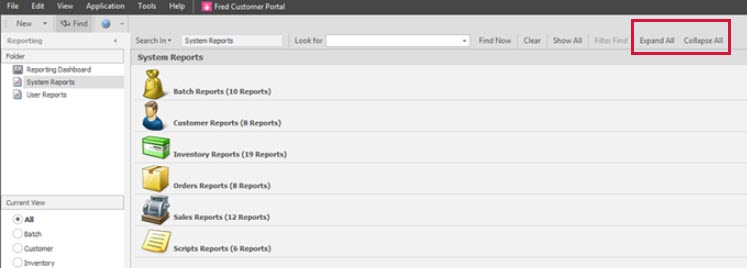
Expand or collapse categories
Use Expand All and Collapse All to quickly expand or collapse the full list of reports.
Reporting Toolbar
All reports in Fred Office Plus use a consistent toolbar to help you quickly filter, customise, and interact with data.

Toolbar buttons
- Perform common tasks such as:
- Saving report layouts.
- Emailing reports.
- Exporting the report to Excel, CSV, or PDF.
- Quick access to Item Quick Action and Pricing Editor.
- Auto Filter Row and Column Chooser.
For more information, see Reports Toolbar.
Accessing System Reports
- Go to Reporting.
- Expand a report category, or look for the desired report.
-
Click to select a report.
Selecting a report will display the common usages and list of available columns to display (on the right-hand side).
Column lists are sorted alphabetically, and default columns are shown in bold in the column chooser so you can identify them.
- Click Open Report or double-click the report name.
View saved or scheduled reports
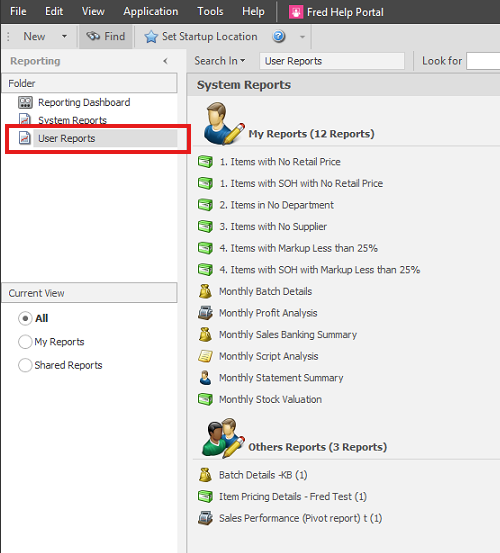
- Go to Reporting.
-
Select User Reports.
This displays all saved and scheduled reports (requires appropriate permissions).
Available report categories
Reports are organised into six categories:
Related resources
- Fred Office Plus User Guide: Emailed and Scheduled Reports
- Data Management reports
- Unmatched Scripts reports
- General accounts and statements activities
- End of day procedures (Z report)
 Introduction to Reports
Click the Chapters icon at the bottom of the video for timestamps.